Yes, you can exercise after shockwave therapy, though what counts as safe on any given day depends on which tendon was treated and how hard you’re planning to push it.
Extracorporeal shockwave therapy, or ESWT (sometimes written extracorporeal shock wave therapy), sends focused sound waves into a stubborn tendon to restart healing that’s stalled, without surgery or an injection.
The advice changes hour by hour after a session, and it changes again as you move through a course.
Shockwave therapy is a safe, non-invasive option for the tendons we treat most often, designed to restart repair rather than replace the training changes a tendon needs.
What a shockwave therapy session leaves behind in the tissue
Each pulse of shockwave from our shockwave machine puts a small, controlled amount of mechanical stress through the injured tissue to stimulate a healing response, and the affected soft tissue reacts the way any stressed tissue does, with a short burst of local inflammation.
That mechanical stress comes from a burst of low energy sound, not electricity, despite the name.
Increased blood flow and new vessel growth restart the stalled healing process, and both need that reaction to happen first.
A treated Achilles or plantar fascia often feels more sensitive for a day or two afterwards, because that low-grade response is doing exactly what the treatment is meant to do.
Loading a tendon hard on the same day works against that early repair, in the same way training legs hard the morning after a heavy squat session rarely ends well.
The treated area needs a short window to get that repair started before it’s asked to absorb impact again.
Why the tender area can feel wider than expected
We use radial shockwave therapy at the clinic instead of the focused type, which concentrates energy at a single depth.
Radial spreads that energy across a broader area of tissue, which is why the tender patch after treatment is sometimes wider than the exact spot that hurts day to day.
Which exercise is fine on the same day after shockwave therapy
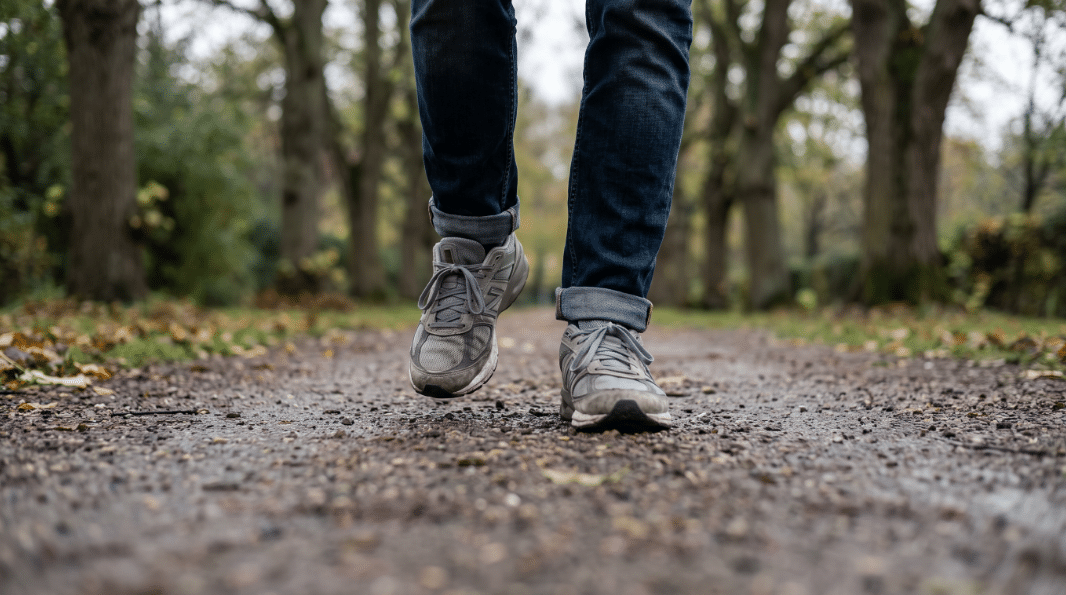
Ordinary movement is fine within hours of your appointment: walking to the shops, climbing the stairs at home, or driving to work all sit well below the load a treated Achilles tendon or plantar fascia needs to worry about.
Gentle activity on the days between sessions supports the treatment, since movement keeps blood moving through a tendon that’s already primed to heal.
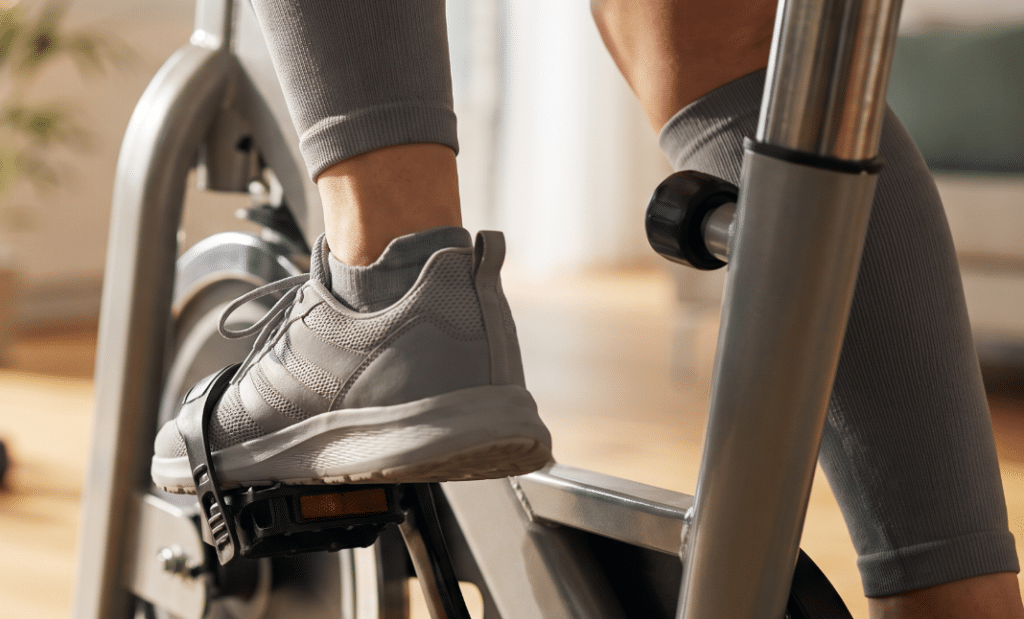
A short swim or a spin on a stationary bike can help with pain relief in the days after treatment, provided neither drives pain up in the injured area itself.
What to hold off on for 48 hours after shockwave treatment
Avoid strenuous, high impact exercise on the treated tendon itself for roughly 48 hours after each treatment.
Running hard on a freshly treated Achilles, jumping repeatedly on a treated patellar tendon, or gripping heavily through a treated elbow all put direct force through tissue that needs those two days to get on with repairing itself.
Anti-inflammatories like ibuprofen can slow things down by dulling the response shockwave relies on, so let us know if you’re taking them regularly between sessions. Our physiotherapists can best advise the correct course of action in person.
Chilling the treated area with ice straight after a session can dampen the healing response you’ve just paid for. A little discomfort is expected, and it usually settles on its own within a day or so.
Tell your physiotherapist if you’re on anticoagulant medication or had a recent corticosteroid injection near the treated joint, since both change how you should exercise around a treatment and how quickly any swelling (oedema) settles.
How training builds back up across a shockwave therapy course
A course of shockwave therapy runs from three sessions up to six, usually about a week apart, and each treatment session should nudge your training load a little further forward.
Shockwave treatment has a cumulative effect, so tendon capacity improves gradually, week by week, as the course progresses.
Most plantar fasciitis cases need at least three treatment sessions before exercise-related soreness starts easing off.
Example: Achilles tendinopathy and running
Most patients receiving shockwave therapy for Achilles tendinopathy manage light jogging by the second or third treatment, while hill sprints and other high-impact running wait until the course is finished.
Following your shockwave sessions with the same training you were doing before your tendon broke down risks setting the repair back to where it started, since the effectiveness of shockwave therapy depends on building load back gradually.
A physiotherapist builds your loading plan around each rehabilitation programme session, so the training and the treatment move forward together.
By your final shockwave session, many of our patients are close to full training again, and the tendon typically keeps strengthening for months following shockwave, well after the course of treatment itself has finished.
How exercise fits into your shockwave therapy recovery plan
Shockwave therapy works best as part of a wider recovery plan that includes exercise.
It has been shown to relieve tendon pain, but shockwave therapy used without any exercise alongside it rarely holds its gains.
Shockwave therapy is an effective treatment for plantar fasciitis, Achilles and patellar tendinopathy, and NICE supports its use for these conditions when exercise runs alongside it.
A physiotherapist assesses which specific exercises your tendon needs and builds them into your physiotherapy plan around each shockwave treatment, tailored to your injury and how it’s responding.
Two conditions where this shows clearly
Hip and gluteal tendinopathy, sometimes called greater trochanteric pain syndrome, is a good example of why exercise matters this much.
The condition needs specific glute-loading exercise to recover fully, since therapy alone won’t build the strength that keeps it from coming back.
Plantar fasciitis is a foot and ankle problem that needs calf and foot strengthening work running alongside shockwave therapy for plantar fasciitis, and an Achilles tendon recovers faster when loading exercises run through the whole course, starting from the first session.
Soreness, bruising and what’s normal after shockwave treatment
Some mild pain after exercising in the days following treatment is normal, and so is a small bruise where the applicator sat against the skin.
Analgesics like paracetamol help with pain management in the days after exercising, without blunting the healing response the way anti-inflammatories can.
Pain levels typically rise a little on days you train harder, then settle again with rest, in the same pattern as ordinary muscle soreness.
Regular pain that builds session after session, instead of settling with rest, usually means the load needs to come down for now.
Significant pain, sharp pain, or pain that stops you weight-bearing normally is different again and isn’t something to push through.
Call the clinic straight away if that happens. There’s no need to wait for your next scheduled treatment.
Shockwave therapy and exercise: your questions answered
Can I go to the gym the same day as a shockwave session?
Yes, provided you avoid direct loading of the treated tendon. A leg day is fine after elbow treatment, and upper body work is fine after a treated Achilles, so long as the specific tendon that was treated isn’t the one under load.
Is it normal to feel worse before you feel better?
A slight dip in comfort over the first day or two is common and doesn’t mean the treatment hasn’t worked. Genuine improvement tends to build gradually over the following weeks rather than appearing straight away.
Should I ice the treated area after exercising?
We’d rather you didn’t. Ice therapy can dull the inflammatory response the treatment relies on, so rest is the better options for any pain or discomfort after activity.
Can athletes keep training through a full course of shockwave therapy?
Most can, with adjustments. We work with the training load you already have, and a physiotherapist will tell you honestly which specific sessions need scaling back, without asking you to stop altogether.
What if exercise causes sharp pain rather than soreness?
Sharp or worsening pain is a sign to stop and get in touch, since it points to the tendon being asked to do more than it can currently manage. We’ll reassess and adjust your plan at your next appointment, or sooner if needed.
Keep training safely through your shockwave therapy course
The benefits of shockwave therapy build fastest when someone who knows your specific injury is guiding both the treatment and the exercise around it, so you’re never guessing what’s safe between appointments.
If a stubborn tendon has been holding your training back, book an assessment online or call us on 07427 737 604.
We’ll tell you exactly what to do and what to leave alone before your first session even starts.
Book Your Appointment
Ready to take the next step? Book your appointment today or call us on 07427 737 604. We’re here to help with tailored, evidence-based care.