

How shockwave fits into your treatment plan
Your physio assesses the injury, uses shockwave to restart the healing process, and builds a rehabilitation programme of targeted exercise around it. The shockwave and the rehab work together to restore the tendon’s ability to take load, and that combination is what produces a lasting reduction in pain rather than a few comfortable weeks.
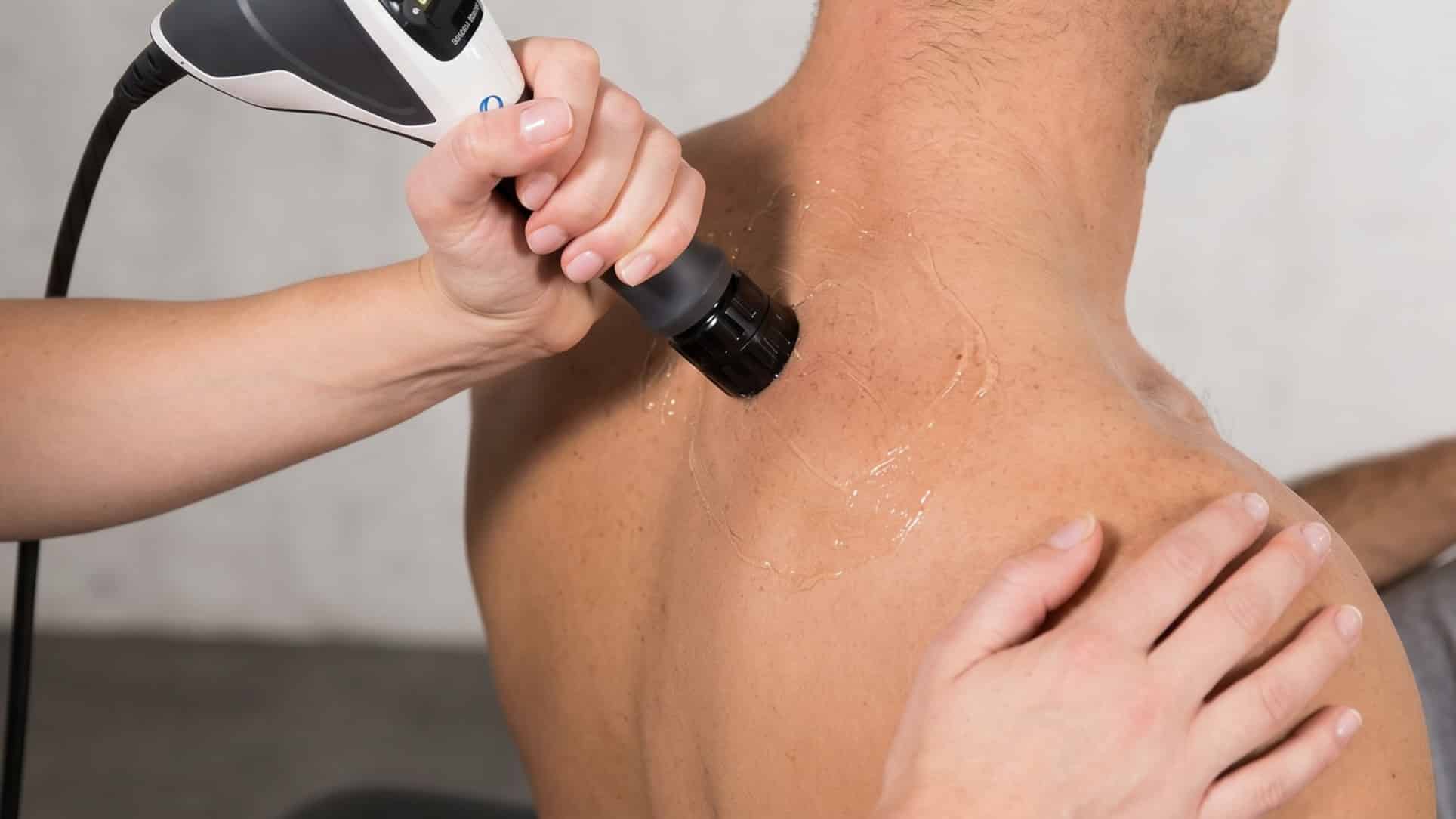
What a shockwave therapy session involves
A typical course runs to three to six sessions, usually spaced about a week apart, though your physiotherapist will give you an honest number once they’ve assessed the injury.
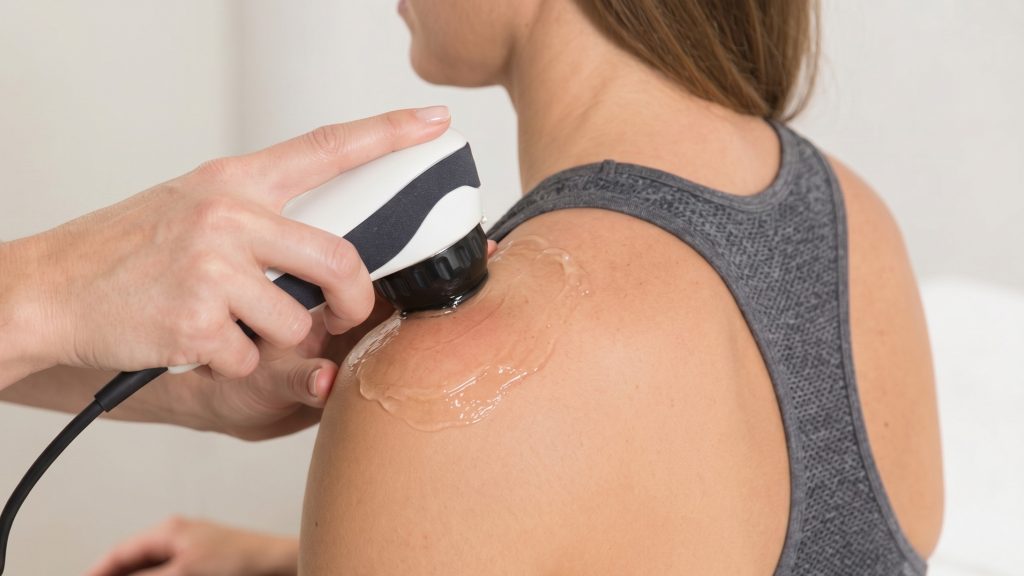
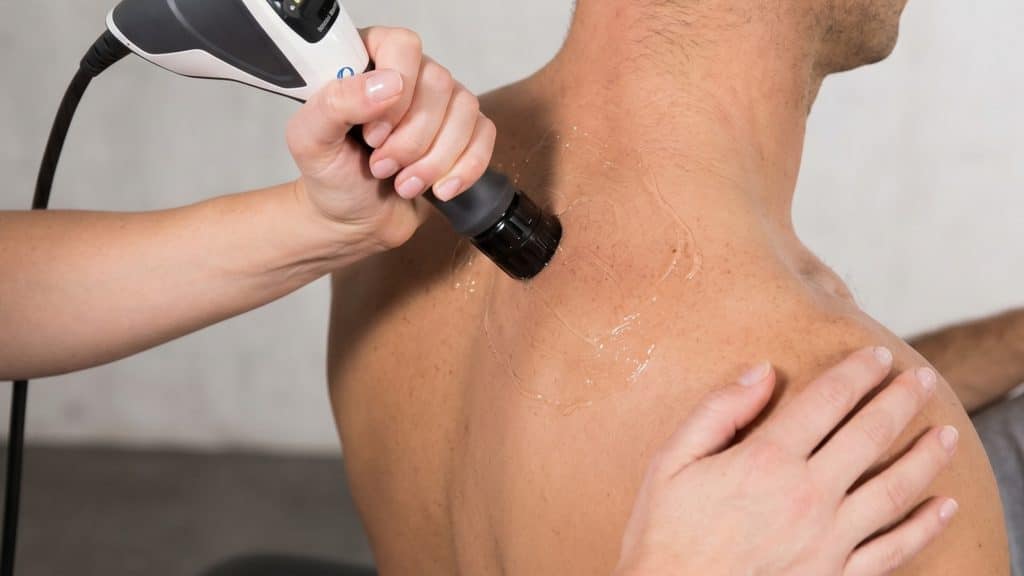
Each session takes around fifteen to twenty minutes. We apply a gel to the skin, then move the applicator over the affected area while it delivers the acoustic waves. Most of the appointment is the treatment itself, with the rest spent checking your progress and adjusting your exercises.
You can usually return to normal activity straight afterwards, though we’ll advise easing off high-impact training around your sessions so the tissue can respond. Improvement is gradual. Because shockwave prompts your body to repair itself, you won’t walk out pain-free that day. Most patients notice a steady reduction in pain over the weeks following their course, and the tendon often keeps improving for up to three months after the final session.
Does shockwave therapy hurt?
Shockwave therapy is uncomfortable rather than painful for most people. As the waves pass into the sensitive area, you’ll feel a strong tapping sensation and some mild discomfort, particularly over the most tender spot.
We control the intensity throughout and adjust it to your tolerance, building up gradually so the treatment stays manageable. If a particular area is too sore, we ease off. Any tenderness afterwards usually settles within a day or two.
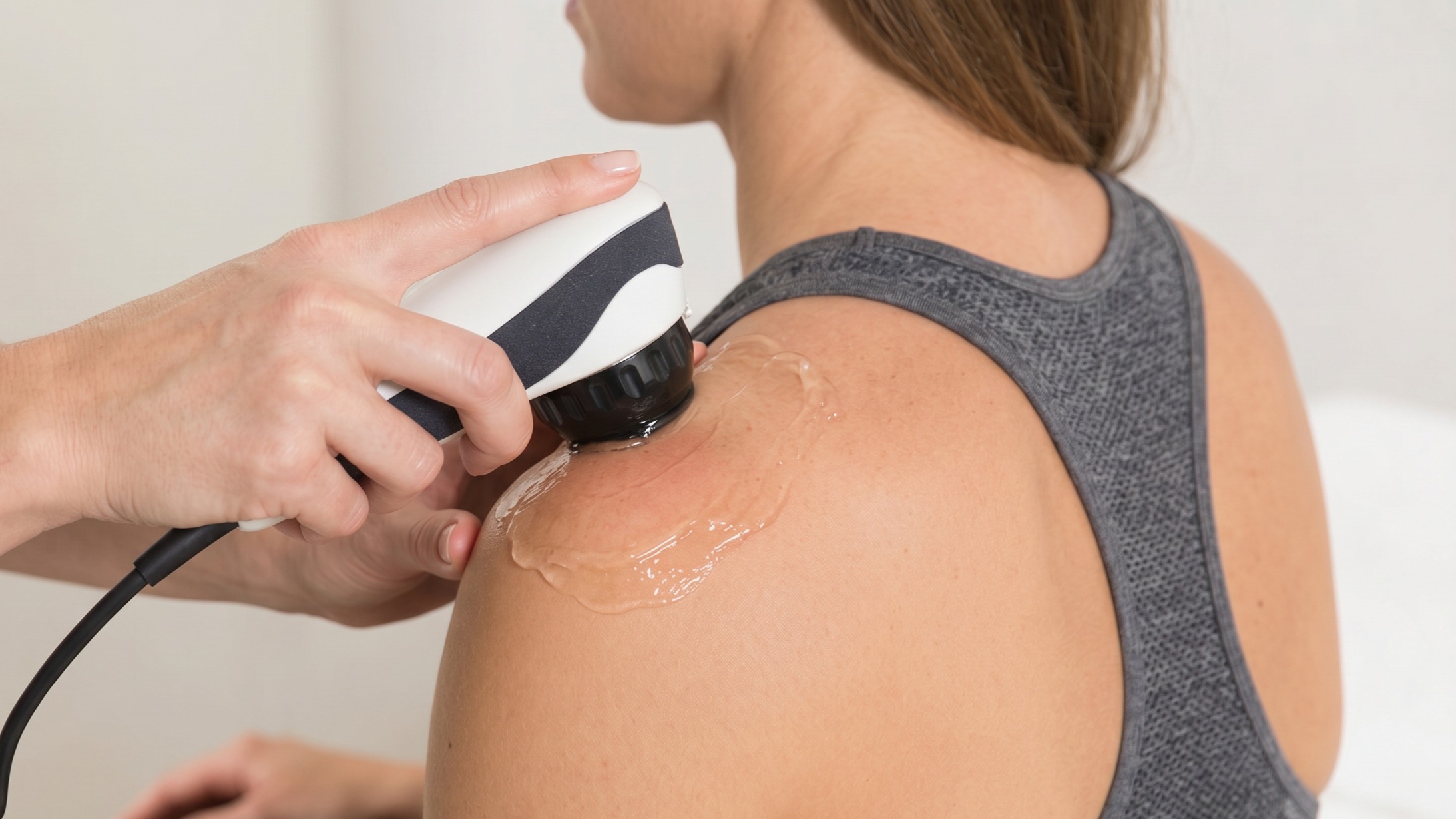
Side effects and who shockwave isn’t suitable for
Side effects from shockwave therapy are minor and short-lived. You might notice some redness, mild swelling or aching in the treated area for a day or so, much like the morning after a hard session in the gym. Serious side effects are rare.
Shockwave isn’t suitable for everyone. We don’t treat over areas of active infection, and it isn’t used during pregnancy, over certain implants, or for people on particular blood-thinning medication or with specific clotting conditions. Tell us about any of these at your assessment and we’ll recommend an alternative. Shockwave is also not a treatment for nerve pain or spinal disc problems, so a bulging disc, for example, needs a different approach.
Why choose Active Health Clinic Glasgow for shockwave therapy
A course of shockwave only helps if it’s aimed at the right structure, so every course at the clinic starts with a proper physiotherapy assessment to confirm the diagnosis and check shockwave is the right treatment for your injury. Pointing the machine at the wrong tissue wastes your time and your money.
Our specialist team holds HCPC registration and membership of the Chartered Society of Physiotherapy, so you’re treated by a regulated expert team rather than a technician. Shockwave is a clinically proven and recommended option for several tendinopathies. The National Institute for Health and Care Excellence (NICE) supports its use for conditions including plantar fasciitis and Achilles and patellar tendinopathy, and research demonstrates it as an effective treatment for chronic tendon pain. It’s in clinical use across physiotherapy, sports medicine and orthopaedics.
We see patients from right across the Glasgow area, including the city centre, the West End and the Southside, and our location at Morris Park has parking on site. With five treatment rooms and a team working seven days a week, we can usually offer an early appointment and keep your sessions on schedule. If you hold cover with Bupa, Cigna or AXA PPP, your treatment may be covered by your policy.
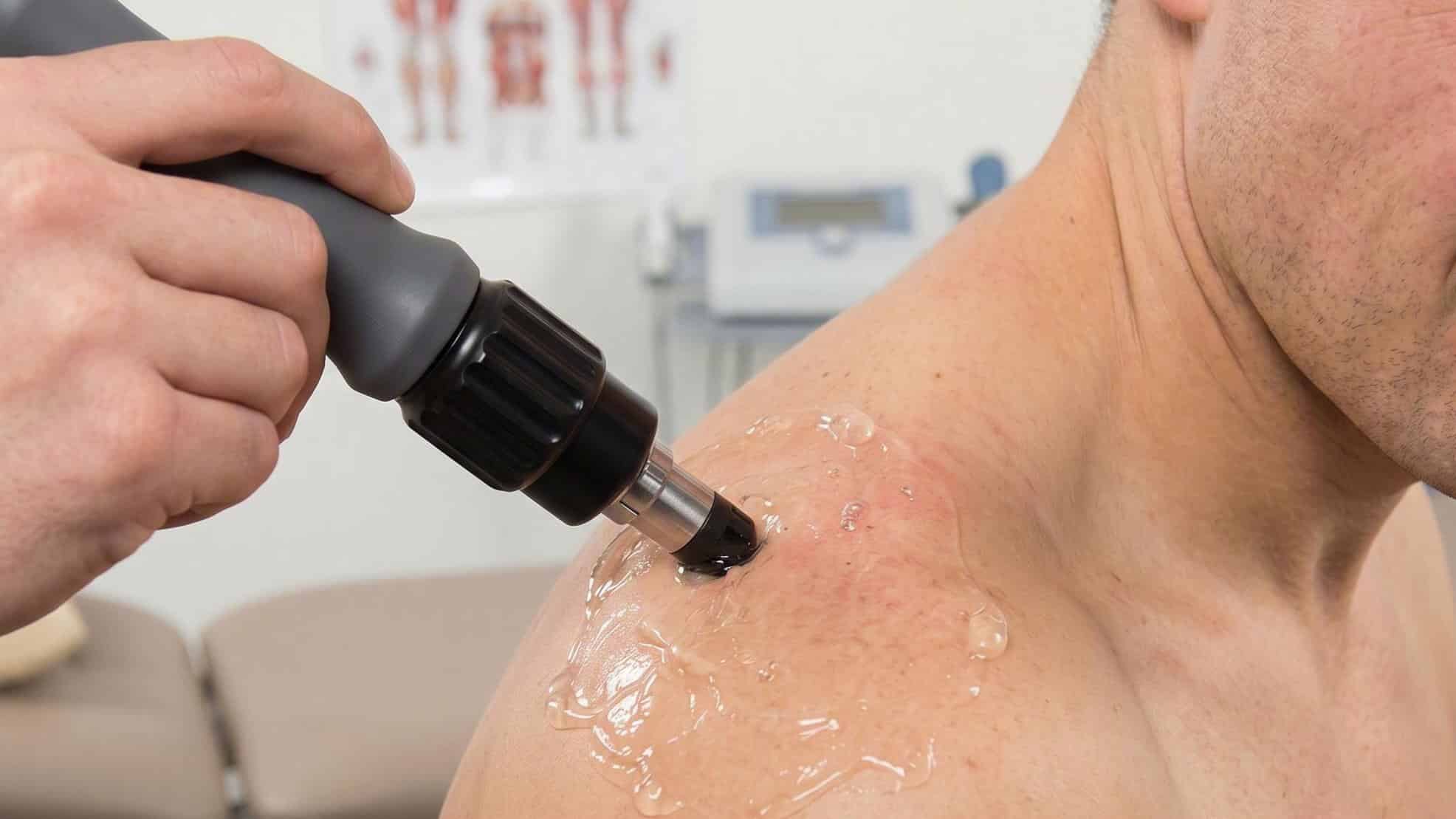
How to book shockwave therapy in Glasgow
Booking an appointment with us is straightforward.
- Get in touch – Book online or call us, and tell us a bit about your injury and how long it’s been going on.
- Assessment – A chartered physiotherapist examines the area, confirms the diagnosis, and tells you honestly whether shockwave is the right treatment.
- Treatment – If shockwave suits your condition, we start your course and build a rehabilitation plan to run alongside it.
- Review and progress – We track your reduction in pain across the sessions and adjust your exercises as the tendon heals.
Book your shockwave therapy appointment in Glasgow
If a tendon injury has been holding you back for months and the usual rest and stretching hasn’t shifted it, an assessment will tell you whether shockwave therapy can finally move it.
Active Health Clinic Glasgow treats patients from across the city with evidence-based, personalised care, and we’ll always be straight with you about whether shockwave is the right call for your injury.
Book your shockwave therapy appointment online, or call us on 07427 737 604 to talk it through with our team first.
Shockwave Therapy Glasgow FAQ
How much does shockwave therapy cost in Glasgow?
Our session and course fees are listed on our price list page. We confirm the full cost before you start, and if you have private health insurance with Bupa, Cigna or AXA PPP, your shockwave treatment may be covered by your policy.
How many sessions will I need for plantar fasciitis or Achilles pain?
Most plantar fasciitis and Achilles tendinopathy cases need three to six sessions, spaced about a week apart. Your physiotherapist gives you a realistic number after assessing your foot or ankle, and we don’t extend a course beyond what your recovery needs.
Can shockwave therapy help a bulging disc?
No. Shockwave therapy is used to treat tendon and soft tissue injuries, not spinal disc problems or the nerve pain that comes with them. If a disc is behind your pain, our physiotherapists will assess it and recommend a treatment plan suited to that instead.
How will I know it's working?
You’ll usually notice a gradual reduction in pain over the weeks after your course, along with easier movement and a return to the activities that used to aggravate the injury. Because shockwave promotes natural tissue healing, the tendon can keep improving for a couple of months after your last session.
Do I need a referral for shockwave therapy?
No. You can book directly with Active Health Clinic Glasgow online or by phone, with no referral needed. We assess your injury at the first appointment and confirm whether shockwave is the right treatment before starting.
Book Your Appointment
Ready to take the next step? Book your appointment today or call us on 07427 737 604. We’re here to help with tailored, evidence-based care.