A run can leave your knees sore for days, and a hard gym floor doesn’t do an aching hip any favours either.
Low impact exercise covers all of it.
It works the same muscles and the same energy systems, just through movement your joints can absorb more easily. It’s a way to stay active through a bad knee or a dodgy hip, instead of stopping training altogether.
Low impact doesn’t mean low effort. A rowing machine session or a brisk swim can leave you just as breathless as a run, with far less strain on the joints.
Low impact and low intensity aren’t the same thing. A low impact session can still push your heart rate hard, especially once you’re easing back into exercise after time off.
What counts as low impact exercise – From Glasgow’s sports massage professionals
Low-impact exercise keeps at least one foot on the ground, or takes weight off the joints entirely, the way water does in a pool.
High impact exercise, running or jump training, sends a force several times your body weight through the knees and hips with every landing.
The impact difference matters most for anyone with existing joint pain, recovering from injury, or carrying extra weight.
Less impact means less stress on your joints, while your heart rate still climbs the way it would on a run.
That might mean a bike instead of a run, or simply landing more softly, while keeping the same exercise going.
The benefits of low-impact cardio
Heart health
Cardiovascular fitness improves the same way whether the exercise is high or low impact, as long as it’s sustained. It just needs to get your heart rate up and stay there.
Walking briskly for thirty minutes does real work for heart health.
Regular low impact cardio is linked to lower blood pressure and a reduced risk of heart disease over time.
For anyone managing high blood pressure already, that’s often the safer route into regular exercise in the first place.
Joint health
Joints benefit directly too.
Movement keeps cartilage and surrounding muscle working, which protects your joints better than rest does.
None of that needs pounding to work.
Strength training alongside cardio work builds the muscle that takes pressure off a joint that’s already under strain.
A brisk session still burns calories and gets your heart pumping. The calorie burn from a brisk walk or swim rivals a much harder session, minute for minute.
Low impact exercises worth trying
Most of the low-impact cardio exercises below need little more than the right shoes or access to a pool.
Walking
Walking is the simplest place to start, and it counts as genuine aerobic exercise once the pace picks up past a stroll.
It suits any beginner and stays gentle on the joints, with no technique to learn first, just supportive shoes and a route.
Adding hills or a light hand weight is enough to increase your heart rate, and neither adds any forceful impact.
Swimming and water aerobics
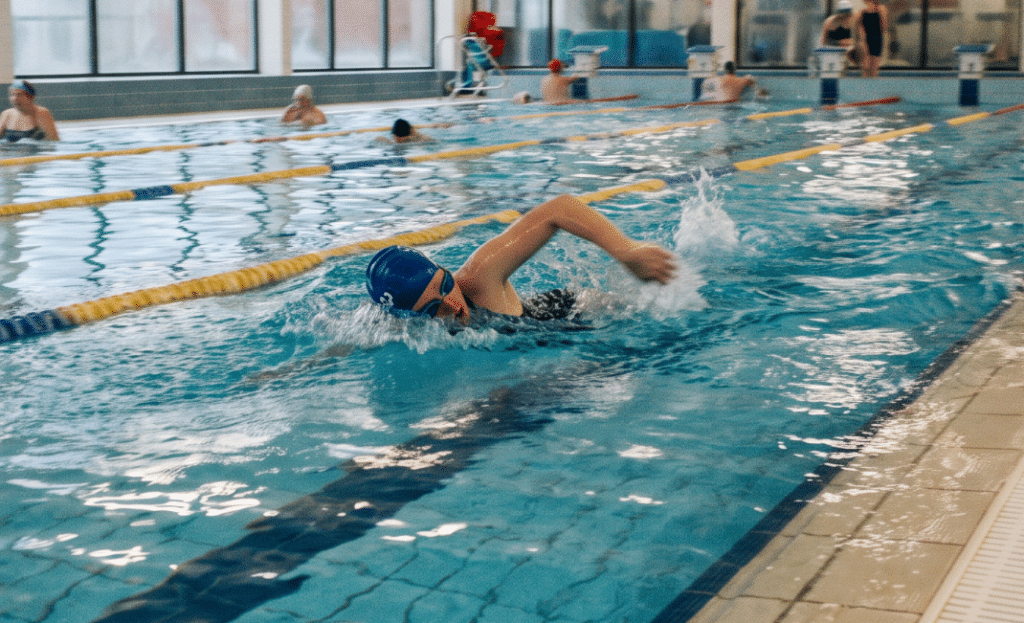
The buoyancy of the water takes most of your body weight off the joints. That’s why swimming suits people with arthritis, or anyone recovering from injury, particularly well.
Water aerobics adds resistance from the water itself, working the upper body and legs together while the water carries the weight.
Add a few resistance moves and it turns into a full-body workout.
Cycling
A stationary bike or an outdoor cycle keeps the knees moving through a smooth, controlled range rather than absorbing repeated shock.
It’s an easy way to raise your heart rate for a full session, all from the saddle.
Rowing
A rowing machine works the legs, back and arms in one motion.
Poor form is the main risk here, so keep the movement smooth rather than yanking the handle.
Row at a steady pace to begin with, then build up as technique improves.
Pilates and yoga
Pilates and yoga build strength and flexibility through slow, controlled movement, with no jumping or pounding involved.
Both work well alongside higher-intensity cardio on rest days.
Neither raises your heart rate the way rowing or cycling does, so they’re better paired with something else than relied on alone for cardiovascular fitness.
Strength training
Bodyweight squats, resistance bands and light weights build strength, and none of it carries the joint stress heavy barbell lifting brings.
A single squat, done slowly and with control, works the same muscles, with no landing involved.
Strength and cardio work together well.
Stronger muscles around a joint absorb more of the load a run or a jump would otherwise put straight through the joint itself.
Getting started with low impact exercise
Building a routine
Most low impact exercise needs no special equipment beyond comfortable shoes, so a home workout is realistic from week one.
A resistance band or two covers most strength work at home if a gym isn’t part of the plan.
Build up gradually, without putting too much strain on a body that isn’t used to regular movement yet.
A few low-impact cardio workouts a week, mixed with strength training, covers most of what fitness guidance recommends.
The standard guidance is around 150 minutes of moderate exercise a week, which breaks down easily into five 30-minute sessions.
Cardio at home, a daily walk and a couple of strength sessions gets most people there, with barely any disruption to a normal week.
Adding intensity safely
Once a routine feels comfortable, interval training adds intensity workouts back in, still at low impact.
Short bursts of effort, on a bike or in the pool, followed by recovery, build fitness fast.
That’s how you increase the intensity of a low impact routine as fitness improves, rather than switching back to high intensity exercises.
Any intensity exercise still needs recovery days built in, whatever the impact level.
Aim for 20 to 30 seconds of harder effort, then a minute or two of easy movement to recover.
When low impact exercise isn’t enough
Persistent joint pain that doesn’t ease with rest and gentle movement is worth having looked at properly.
Pain that develops in a previously comfortable routine is often a sign something specific needs assessing.
A certified personal trainer can help build a general fitness plan, but persistent joint pain needs a clinical assessment first.
Our chartered physiotherapists assess what’s causing the pain, whether that’s knee pain, hip pain or a back pain that flares with certain movements. They build a plan around what they find.
We treat you as a whole person, looking at movement patterns and lifestyle alongside the joint itself.
Low impact exercise questions answered
What is the best low-impact exercise?
Building a low impact workout you’ll actually stick with matters more than picking a single best exercise. Swimming suits joint pain particularly well, cycling suits anyone wanting a strong cardio session, and walking suits almost everyone as a starting point.
Can you lose weight with low-impact exercise?
Yes. Weight loss comes down to burning more calories than you take in. Low impact exercise burns calories just as effectively as high impact when the effort and duration match.
Is walking considered low-impact exercise?
Yes, walking is an accessible form of low impact exercise. Picking up the pace or adding an incline is enough to make it effective cardio.
What is the 5 5 5 30 rule?
It’s a simple habit-building routine: five minutes of movement, five exercises, five days a week, for thirty days. It’s designed to build a consistent habit rather than replace a full exercise programme.
Do I need special equipment for low-impact exercises?
Not for most of it. Walking, bodyweight strength work and swimming all need little beyond suitable clothing and, for swimming, access to a pool. Resistance bands are a low-cost option if you want to add strength training at home.
Get advice tailored to you with Active Health Clinic
Joint pain has a way of shrinking your world, cutting out the activities you actually enjoy. It doesn’t have to stay that way.
If joint pain is limiting what you can do, an assessment tells you exactly what’s going on and what will actually help.
From there, we’ll build a plan around getting you back to the activity you miss, whether that’s running, swimming, or just walking without wincing.
Book online or call us on 07427 737 604, and we’ll get you started and guide your through our physiotherapy and sports massage services.
Book Your Appointment
Ready to take the next step? Book your appointment today or call us on 07427 737 604. We’re here to help with tailored, evidence-based care.