We’ve just installed a new shockwave therapy machine at Active Health Clinic Glasgow.
And it’s already changing what we can offer patients whose tendon or heel pain has dragged on for months despite rest, stretching and exercises.
Shockwave therapy, known as extracorporeal shockwave therapy (ESWT) in full, works by delivering focused, high-energy acoustic waves into damaged tissue.
It helps restart a healing process that’s stalled, stimulating blood flow and prompting a controlled repair response in tendons and ligaments which are struggling to recover on their own.
Learn more about how it works from our experienced physiotherapists.
What Shockwave Therapy Is – Our Latest Treatment at Active Health Clinic Glasgow
Shockwave therapy offers a non-invasive treatment that uses high-energy sound waves, delivered as short pulses of acoustic pressure, to treat injured soft tissue and tendon without the need for surgery or injections.
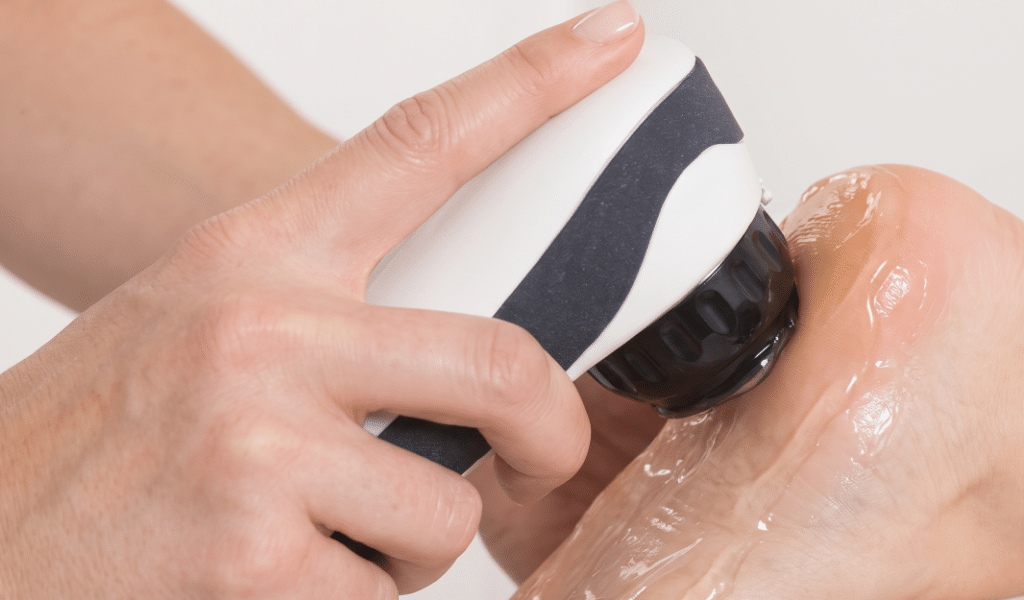
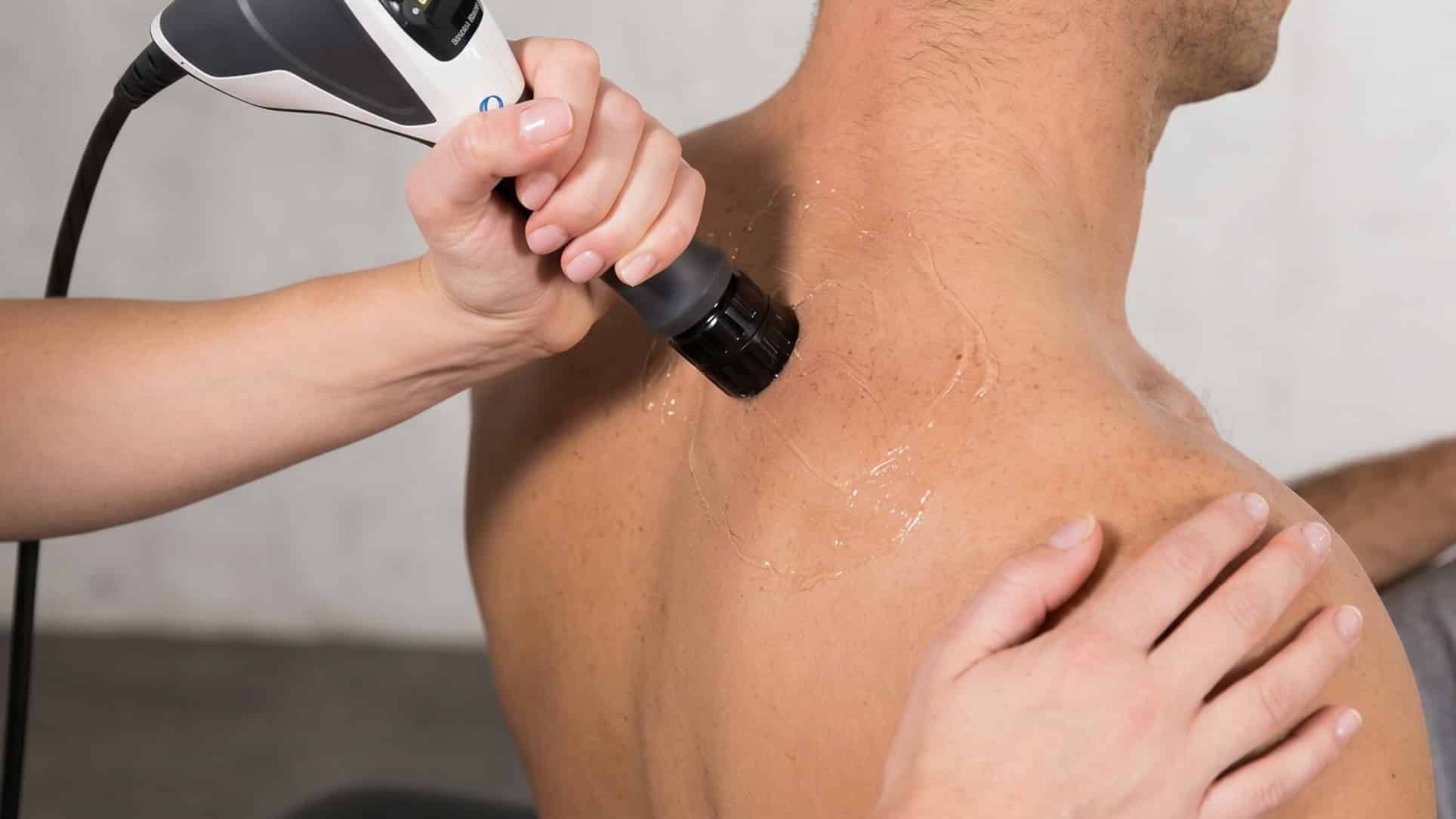
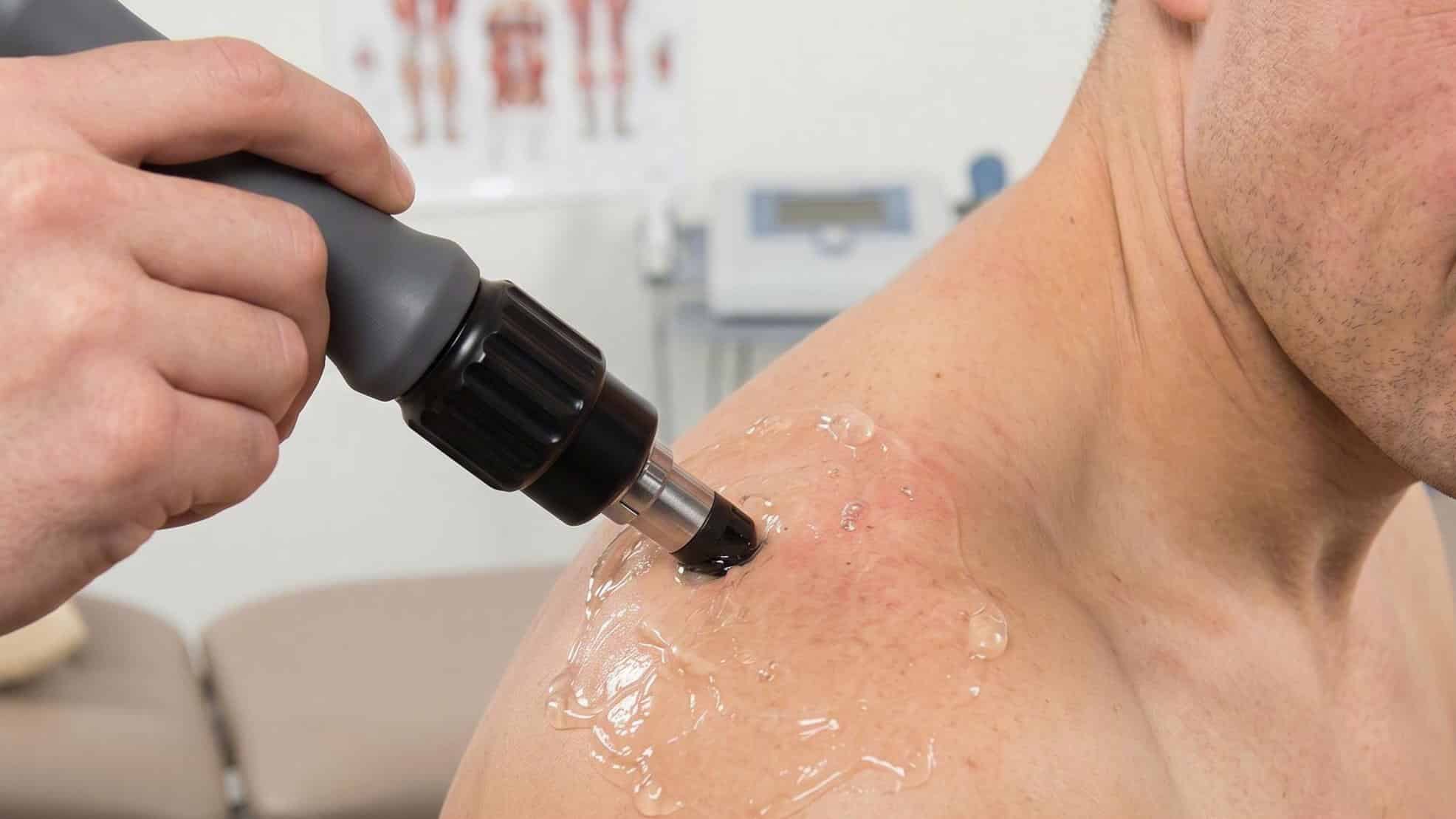
A handheld applicator passes those pulses through the skin and into the treated area, targeting the exact tendon or ligament that’s causing pain.
Our new machine delivers radial shockwave, which spreads its energy across a broader area of tissue, rather than focused shockwave, which concentrates energy at a single depth, and radial suits the tendon injuries we see most often at the clinic.
Shockwave uses sound waves that travel through the skin without a single incision, so there’s no cutting and no anaesthetic involved at any point.
How Shockwave Therapy Works
Each pulse the machine delivers triggers a small, controlled amount of trauma and a mild inflammatory response in the tissue to promote healing.
This prompts the body to increase blood circulation, stimulate the formation of new blood vessels, and encourage the cells that produce collagen to repair damaged tissue.
Growth factors are released as part of that response too, and stimulating collagen production alongside increased blood flow and new vessel formation gets a stalled tendon healing again in the days and weeks after the appointment.
Inflammation and pain typically ease as that repair process continues.
The Benefits of Shockwave Therapy
Shockwave therapy can reduce pain and improve mobility within weeks.
As it accelerates the healing already underway in the tendon, most people notice steady progress well before their course comes to an end.
Improved blood flow to the area lets a stalled tendon start repairing itself again, and pain eases as movement returns over the following weeks.
Why Chronic Tendon Problems Respond
Chronic tendon problems like tendinopathy often involve tissue that has calcified or scarred over, or stuck in a loop of low-grade damage instead of progressing to repair.
Shockwave interrupts that loop by breaking down calcification and injured tissues that are resistant to change on their own.
The energy also disrupts local nerve endings, which is why many patients notice a reduction in pain during the course of treatment even before the underlying tendon has fully healed.
Where the Technology Came From
Shockwave technology was originally developed to break up kidney stones without surgery, a process called lithotripsy.
But doctors treating patients in the 1980s noticed the same acoustic waves also sped up bone and soft tissue healing nearby.
That discovery carried the technology into orthopaedics, sports medicine, physical medicine and rehabilitation.
Now it has made its way into our clinic in Glasgow, so we can help patients with an array of different conditions.
Musculoskeletal Conditions Shockwave Therapy Suits
Plantar Fasciitis
Plantar fasciitis brings people through our door for shockwave more than any other diagnosis.
The tight, painful band of tissue under the foot rarely settles on its own once it’s been aggravated for months. Shockwave therapy gives that stalled healing the push it needs.
Other Conditions We Treat
Wider heel and foot pain responds in a similar way.
So do the other tendinopathies we treat most often with the new machine: Achilles tendinopathy, tennis and golfer’s elbow, patellar tendinopathy (jumper’s knee) and calcific shoulder tendinitis.
Each of these is a soft tissue injury where the tendon or joint has stopped repairing itself and needs more than rest to recover.
Beyond this list, shockwave treats a wider range of conditions once a physiotherapy assessment confirms it’s the right fit for a given musculoskeletal problem.
Chronic Injuries Respond Best
Shockwave works best on tendon problems that have already become chronic, typically ones that have lingered for six weeks or more without improving.
By that point, the tissue has usually stopped healing on its own, and extra time alone won’t fix it.
The underlying repair process needs a fresh mechanical stimulus to get going again, which explains why shockwave works particularly well once more conservative options like stretching or load management haven’t shifted the problem on their own.
What Happens During a Shockwave Therapy Session
Each shockwave session takes around fifteen to twenty minutes.
And a typical course runs to three to six sessions spaced roughly a week apart, though the exact number of sessions depends on how long the tendon has been struggling.
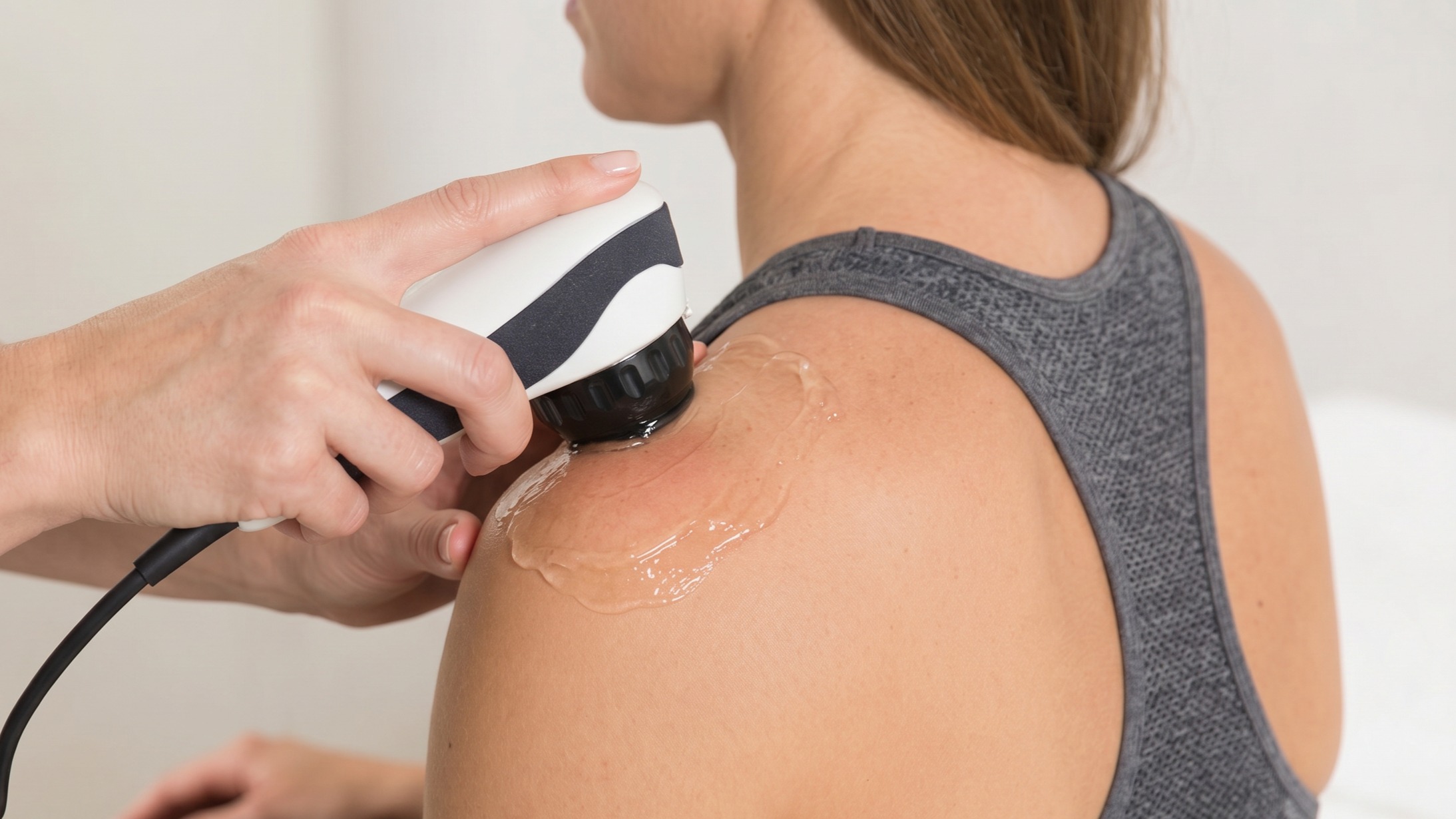
We apply a gel to the treated area and then move the applicator across the affected area while it delivers the pulses.
We find that most people describe the sensation as a strong, rhythmic tapping.
Typically, you can return to normal daily activity straight after your appointment since recovery time is minimal.
However, we’ll usually ask you to ease off high-impact training around your sessions so the tissue has room to respond.
You might feel a bit sore, notice a small bruise, or have mild swelling around the treated area for a day or so afterwards, and none of it comes with real downtime beyond that.
Who Shockwave Treatment Isn’t Suitable For
Shockwave doesn’t suit every patient.
We check your history and confirm it’s the right call for your injury with a proper assessment before your first session, well before the machine is ever switched on.
We don’t treat active infections, and shockwave isn’t used during pregnancy, over certain metal implants, or for anyone with blood clotting disorders or a recent steroid injection in the treatment area.
Nerve pain and spinal disc problems don’t respond to shockwave either, because the treatment is built for tendon and soft tissue injuries.
Should any condition find you unsuitable for the treatment, our experienced physiotherapists will be on hand to offer effective alternatives for safe recovery and healing.
Your Shockwave Therapy Questions
Does shockwave therapy hurt?
Shockwave feels uncomfortable rather than painful for most people, particularly over the tender part of the tendon, and we control the intensity throughout so you’re never dealing with more than you can manage. Any soreness afterwards is usually gone within a day or two, and full pain relief still tends to build gradually over the following weeks.
How soon will I notice a difference?
Improvement tends to be gradual rather than immediate, because shockwave prompts your body’s natural healing mechanisms to get back to work over the following weeks. Most patients notice a steady reduction in pain and improved mobility over the weeks following their course, and the tendon often keeps improving for up to three months after the final session.
How many sessions will I need?
A typical course runs to three to six sessions, and your physiotherapist gives you a realistic number once they’ve assessed your specific injury.
Is shockwave therapy covered by insurance?
If you hold private health cover with Bupa, Cigna or AXA PPP, your shockwave treatment may be included under your policy, and we’ll help you check before your course begins. Full pricing for patients paying privately is on our price list.
Book Your Shockwave Therapy Appointment at Active Health Clinic
We’re excited about what this new machine means for patients at Active Health Clinic Glasgow, because it gives us another route forward for tendon pain that’s dragged on for months, sometimes years, despite rest, stretching and standard physiotherapy.
Shockwave adds a non-invasive alternative to surgery and to injections alongside everything else we already offer, from physiotherapy and manual therapy to podiatry, so patients now have more ways to heal and recover, with each treatment chosen to fit the injury in front of us.
The benefits of shockwave therapy build gradually over several weeks, and we combine it with targeted exercise and manual therapy to keep that recovery moving.
Book online or call us on 07427 737 604, and we’ll assess whether shockwave is the right next step for your injury.
Book Your Appointment
Ready to take the next step? Book your appointment today or call us on 07427 737 604. We’re here to help with tailored, evidence-based care.