
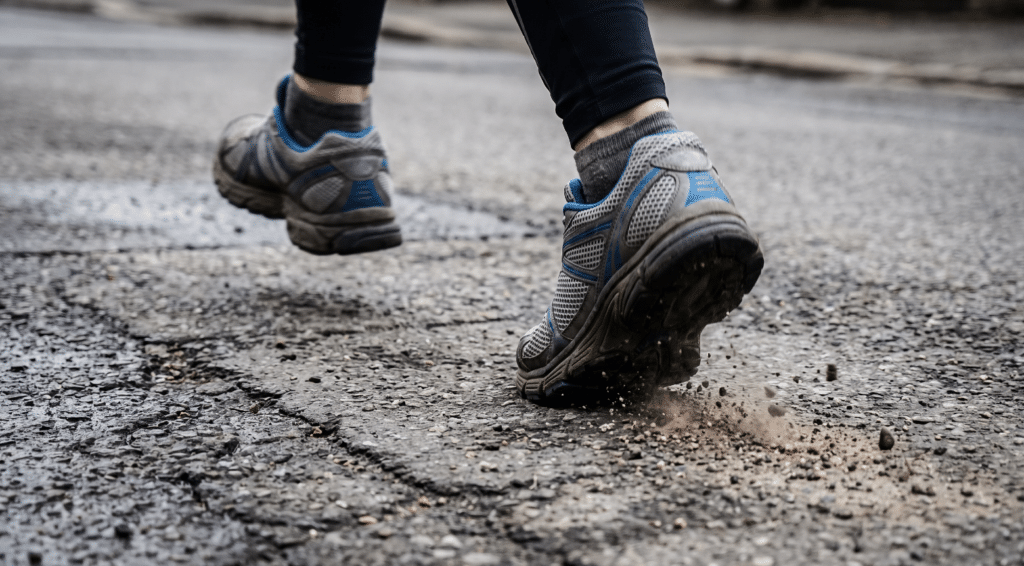
If your shin, knee or heel has started to ache on runs, you may be wondering whether to rest or change your training. The answer depends on what’s causing the pain and how it responds to exercise.
Overuse injuries typically develop gradually, while a muscle strain can begin with a sudden pull.
These are common running injuries, what they feel like and when to get them checked.
Common running injuries and what they feel like – By sports massage Glasgow professionals
Shin pain and shin splints (medial tibial stress syndrome)
Shin splints, known medically as medial tibial stress syndrome, cause pain and tenderness along the inner edge of the tibia, the main bone in your lower leg.
The ache may ease as you warm up and return afterwards.
Shin pain builds when mileage rises faster than bone and muscle can adapt, particularly on hard surfaces.
Runner’s knee (patellofemoral pain) and iliotibial band syndrome
Runner’s knee, or patellofemoral pain syndrome, causes pain around the front of the knee or behind the kneecap.
You may notice it on stairs, when squatting or running, or after sitting with your knees bent for a long time.
Iliotibial band syndrome usually causes pain on the outside of the knee during running.
The iliotibial band, or ITB, is a thick band of tissue running down the outside of the leg from the hip to just below the knee.
Changes in training and the way the hip and knee move can contribute to irritation around it.
Exercises for the quadriceps and hip muscles can form part of treatment for either condition, with the choice of exercises based on an assessment.
Achilles tendinopathy
Achilles tendinopathy affects the tendon that connects your calf muscles to your heel.
It causes pain and stiffness at the back of the heel or just above it, often most noticeable on getting up in the morning or starting a run.
Tight calf muscles and a sudden rise in hill or speed work add to the load.
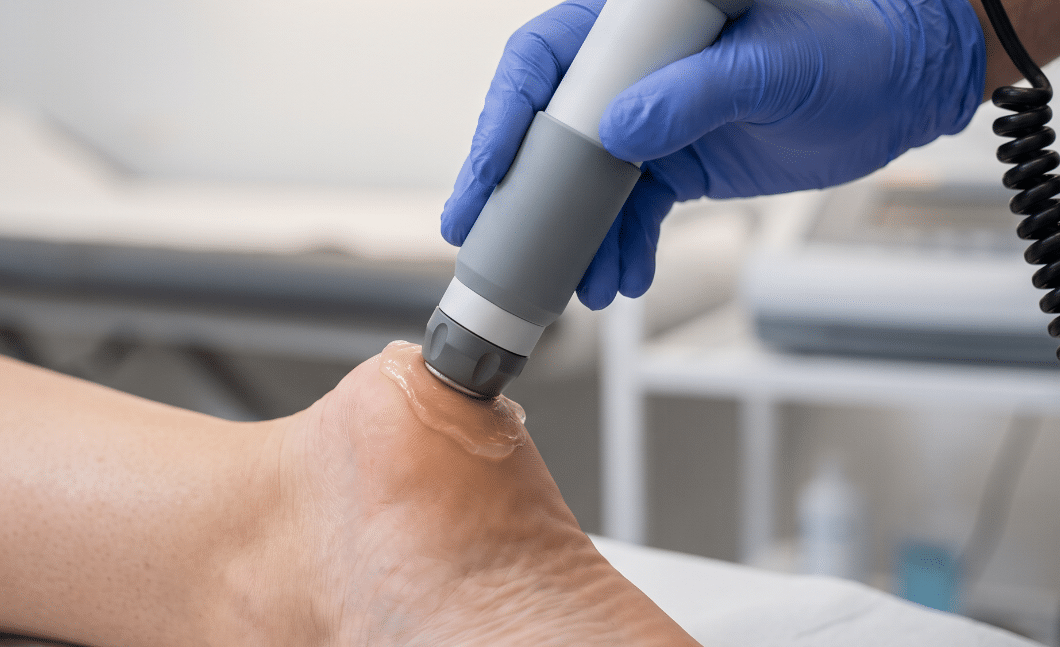
If pain persists despite an appropriate exercise programme, our physiotherapists can assess whether shockwave therapy is worth considering alongside rehabilitation.
Calf and hamstring strains
A calf or hamstring strain can feel like a sudden pull or sharp pain, particularly during faster running.
Stop the run if this happens.
An assessment can establish how severe the injury is and what you need to do before returning to running.
Plantar fasciitis and heel pain
Plantar fasciitis causes heel pain with the first steps after sitting or sleeping.
The plantar fascia is the thick band of tissue under the foot, and mileage, hard surfaces or worn footwear can overload it.
Stress fractures and bone stress injuries
A stress fracture is a small crack in a bone, such as the tibia or a foot bone, caused by repeated impact without enough recovery.
Bone stress injuries range from an early stress reaction to a fracture.
Pain in a specific spot on a bone can be a warning sign. It may initially ease with rest, then start to hurt during everyday walking or at night as the injury worsens.
If you suspect a bone stress injury, stop running and seek a medical assessment promptly.
Continuing to run on it can make the injury worse.
Common causes and risk factors of running injuries
Sudden increases in mileage or intensity, changes in terrain, footwear or routine, and poor recovery between sessions all contribute to running injuries.
A previous injury is another risk factor, particularly if you haven’t recovered enough for the demands of your usual runs. Reduced strength or muscle control may also contribute.
Fatigue can affect your running technique. For example, your foot may start landing further ahead of you, known as overstriding.
Changes in gait can alter how your legs take the load, but no single running style explains every injury.
What to do when a running injury starts
Whether you can keep running depends on the injury.
Some problems need a break from running; others can be managed by adjusting your training with advice from a physiotherapist.
If running brings on pain, stop the session and get it checked if it persists or keeps returning. An ache easing during the warm-up doesn’t mean it’s necessarily safe to carry on.
Stop running and have it assessed promptly if the pain is sharp, changes how you run, sits on one spot on a bone, wakes you at night or doesn’t ease with rest.
Stay fit while you recover
Cycling, swimming or pool running may help you stay fit while you recover, provided they’re suitable for your injury.
Ask your physiotherapist which activities and strength exercises you can continue, particularly if you’ve been told to limit weight-bearing activities.
How sports massage helps runners
Sports massage can help a runner with tight, tired muscles between training sessions.
Tell your therapist about any injury before treatment so they can check whether massage is appropriate.
Our therapists use techniques such as sustained pressure and stretching, along with friction and trigger point work, to ease muscle tightness.
They can adjust the pressure if it feels uncomfortable.
Our sports massage in Glasgow is provided in the same clinic as our physiotherapy service.
If your massage therapist thinks an injury needs a physiotherapist’s assessment, they can refer you internally.
Injury prevention for runners
When you add distance to your runs, give yourself time to get used to it before increasing the pace as well.
Leave room for recovery between sessions, especially after a harder run than usual.
If you switch from road running to grass or trails, build up gradually on the new terrain too.
The role of strength training
Strength training helps your muscles cope with the demands of running.
Squats work the quadriceps and glutes, while calf raises target the calves and bridges work the glutes and hamstring muscles. Single-leg exercises can also help with balance and stability.
Move slowly through each strength exercise, and stop before it hurts.
Warm-up and cool-down after exercise
Start with a few minutes of walking or easy jogging before running faster.
After the run, slow to a walk while your breathing and heart rate settle.
Common questions about running injuries
How long does a running injury take to heal?
Recovery depends on the type of injury, how severe it is and how long you’ve had it. After an assessment, your physiotherapist can explain what to expect and how to judge when you’re ready to do more.
Why do my knees hurt when I run?
Knee pain in a runner can have several causes. A recent increase in mileage may be relevant, but the location of the pain and the activities that bring it on also matter. An assessment can help establish what needs to change.
How do I avoid reinjury?
Keep up the strength exercises during your return to running, and review any training changes that contributed to the injury. Our physiotherapists can set out a structured return-to-running plan so you know how much to do and when to progress.
Do running shoes prevent injury?
No pair can guarantee that you won’t get injured. Choose shoes that fit comfortably and check them for wear, but consider your training and recovery too if an injury keeps returning.
What is the difference between a physiotherapist and a podiatrist?
A physiotherapist assesses how your muscles and joints work together from hip to foot. A podiatrist focuses on the foot and lower leg and how they work when you walk and run.
Get back to running with Active Health Clinic
Book an assessment if a running injury is stopping you from training. We’ll look at what’s causing the pain and explain how treatment can help you run again.
Book an appointment online or call us on 07427 737 604 to get your running injury looked at.
Book Your Appointment
Ready to take the next step? Book your appointment today or call us on 07427 737 604. We’re here to help with tailored, evidence-based care.