
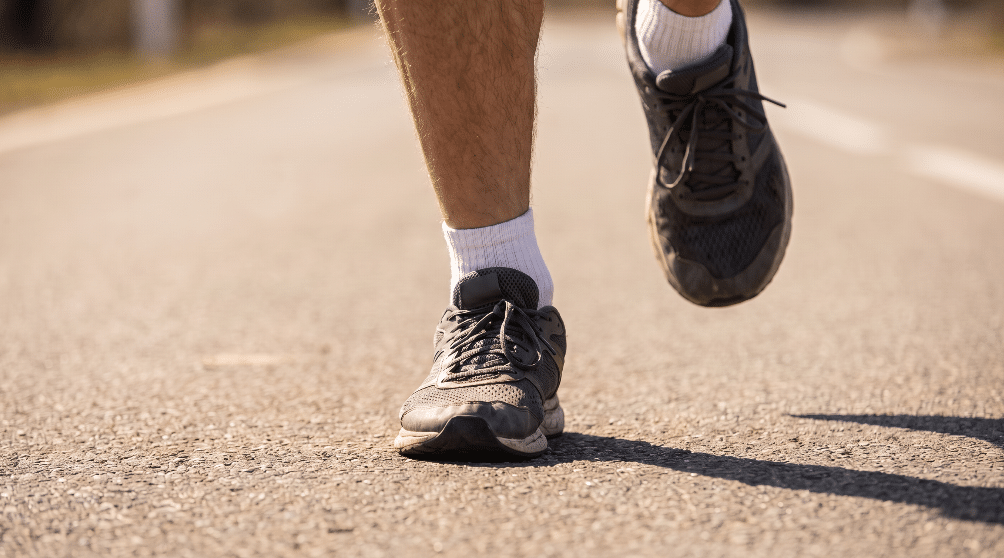
To get into running, start with short, easy runs and walk between them. One minute of running at a time is enough for your first sessions, with a day off between each one.
The 12-week plan below builds towards half an hour of continuous running.
Listen to your body and repeat any stage that feels difficult. There’s no need to move on just because another week has passed.
At Active Health Clinic Glasgow, our chartered physiotherapists and sports massage therapists work with runners, including those whose training has been interrupted by injury.
A physiotherapy assessment brings together your training history and checks of your strength, mobility and movement.
Before you start running as a beginner – Guide by Glasgow sports massage experts
Speak to your doctor before you start if you have a long-term health condition such as asthma, diabetes or high blood pressure, or if you’re pregnant or recovering from surgery.
If you’re new to running and otherwise well, a decent pair of trainers and a plan are all you need to begin.
Choosing running shoes that fit
Comfortable trainers will do for your first few sessions.
If you decide to keep running, it’s worth trying shoes designed for it before buying a pair.
Go in the afternoon, when your feet are at their largest, wearing the running socks you plan to use, and leave a thumb’s width of space beyond your longest toe.
Choose road running trainers for pavements and park paths.
A good pair of running shoes may last roughly 300 to 500 miles, though wear varies with the shoe and how you use it.
Race shoes or competition shoes should only be used on special runs. Wearing them every day can increase your injury risk.
In winter, add a reflective layer, since the sun sets in Glasgow before four o’clock in December.
Beyond that, comfortable running kit is more than enough.
A beginner training plan for your first 5k
This is an example schedule for three sessions a week. If you miss a few runs, return to a stage you were comfortable with rather than trying to catch up.
Start with run-walk intervals
For your first session, run gently for one minute, then walk for 90 seconds. Repeat that eight times.
When you start to run, the walking intervals give you a chance to catch your breath before the next effort.
As the running intervals get longer, keep them at the same easy pace.
The walking breaks stay between 90 seconds and two minutes until you’re ready to run continuously.
A 12-week run schedule example
Do each stage three times a week, and repeat a stage if it felt hard.
- Start with one minute of running and 90 seconds of walking, repeated eight times, for weeks one and two.
- Move to three minutes of running and 90 seconds of walking, repeated five times, for weeks three and four.
- Run for five minutes, walk for two and repeat twice more for weeks five and six.
- Run for 10 minutes, walk for two and run for another 10 through weeks seven and eight.
- Run for 20 minutes without stopping in weeks nine and ten.
- Build towards 30 minutes of running in weeks 11 and 12.
Running for 30 minutes doesn’t necessarily mean you’ve covered 5k.
If you’d like to run your first 5k at a parkrun, you can walk part of the course or spend a few more weeks building up beforehand.
How long each session should last
A session lasts 20 to 30 minutes of running and walking, plus a five-minute warm-up before and a five-minute cool-down walk after.
How many days a week to run
Leave a day between runs to give your legs time to recover.
An easy walk is fine on those days if you feel comfortable, but adding extra runs can increase your risk of injury while you’re getting used to the exercise.
A Tuesday, Thursday and Saturday schedule leaves a break after every run and may be easier to fit around work than choosing different days each week.
Measure time before distance
Use a timer for these sessions rather than aiming for a particular running distance.
How far you get will depend on your pace and the route, and there’s no need to speed up to reach a kilometre target.
Run slower than feels natural
If you’re out of breath within the first minute, try running slower.
New runners can easily set off at a pace that’s too hard to keep up, even when it doesn’t seem particularly fast.
The talk test is a useful check: you should be able to say a full sentence aloud while you run.
If you’re struggling to get more than a few words out, slow down or take a walking break.
Keep that easy effort as the intervals lengthen. You don’t need to work on speed while you’re learning to run for longer.

Running form for a new runner
Stand tall with relaxed shoulders, look about 10 metres ahead, and take short, light steps that land under your body instead of out in front of it.
Overstriding, where the foot lands well ahead of the body, adds braking force through the shin and knee with each step.
A slightly higher cadence, meaning a few more steps per minute at the same easy pace, shortens your stride and cuts overstriding.
Your running style will keep changing as you get fitter, so aim for quiet, relaxed footsteps for now.
Warm up, cool down and the post-run routine
Begin each session with five minutes of brisk walking, with some marching on the spot and hip circles mixed in so your legs are moving before you run.
Finish with a post-run walk of about five minutes to let your breathing and heart rate settle.
Then stretch your calves, hamstrings, hip flexors and quads while the muscles are warm.
Outdoors or on a treadmill
A treadmill offers a cushioned belt and shelter from the weather, so it’s a comfortable place to learn run-walk intervals.
Outdoor running adds uneven ground and hills, so include some outdoor sessions before your first parkrun, even if you start indoors.
Strength work to prevent injury
Two short strength sessions a week build the calves, glutes and hips that absorb the impact of each stride.
You could spend about 15 minutes on single-leg calf raises, step-ups onto a low bench, glute bridges and side planks on a day when you’re not running.
A physiotherapist or personal trainer can check your technique on the exercises.
Common beginner aches and when to get them checked
Sore muscles a day or two after your first few runs are normal. This delayed onset muscle soreness, often shortened to DOMS, peaks within about two days and eases over the next few.
Shin pain and other common problems
Shin splints can develop when you increase your running time too quickly. They cause pain and tenderness along the shin, but shin pain can have other causes too.
If running brings on shin pain, stop the runs that aggravate it.
Let it settle before building back up, and get advice if it worsens or isn’t improving.
Runner’s knee shows as pain around the kneecap, Achilles tendinopathy (an irritated heel tendon) as stiffness at the back of the heel, and plantar fasciitis as heel pain on your first steps in the morning.
Pain can also be felt in the lower back.
When to get an ache checked
Stop and walk if pain is sharp, builds as you run or makes you limp.
Swelling, night pain or pain that hasn’t eased within a week is worth a running injury assessment.
Sports massage between runs
If your calves or thighs feel tight between runs, you may find sports massage helpful.
Sports massage uses sustained pressure, friction, trigger point work and stretching to ease tightness in those muscles.
For runners who want regular massage, we usually suggest fortnightly or monthly maintenance appointments.
Your therapist can discuss how often to book based on your training and how you feel afterwards.
When you come to us for sports massage in Glasgow, your therapist can arrange an internal referral to our physiotherapy team if an ache needs further assessment.
What to expect at your first massage session
Your chosen therapist starts with a few questions about injuries and health, so mention your running plan and any aches.
They apply appropriate pressure and techniques, and adjust if anything feels too uncomfortable. Afterwards they may suggest stretches to repeat at home.
Stay motivated and plan your next run
It helps to decide when you’ll run before the week gets busy. Choose a time you can usually manage and a familiar route, so getting out doesn’t take much organising.
A running app can time the intervals for you.
You might also keep a few notes after each session; looking back at how long you could run a month ago can be encouraging when a run feels difficult.
If having something to aim for helps, finishing your first 5k at a parkrun is one option. There’s no need to set a finishing time.
Expect the first weeks to feel hard
Your first few sessions may feel awkward, and you might need more walking than you expected.
Repeat the same intervals until they feel manageable before making them longer. A difficult session doesn’t mean you need to abandon the plan.
Join a run club or parkrun
Before you join a running club, ask its run coaches whether there’s a beginner group and what pace to expect.
You can also walk, jog or run at parkrun, a free weekly 5k held on Saturday mornings.
Getting back into running after a break
If you’re getting back into running after a break, choose a shorter session than you used to do and include walking intervals.
How much you need to cut back depends on the length of the break and how active you’ve been during it.
If an injury caused the break, our physiotherapists can assess whether you’re ready to resume and set out a return-to-running plan.
That gives you a starting point based on your recovery rather than your old running times.
From your first 5k to a 10k
Once you can run a 5k comfortably for a few weeks in a row, start lengthening your longest run by a few minutes each week.
Leave the other two as they are.
Keep the rest days and strength work in place as you work towards 10k. If the longer run leaves you struggling through the next session, hold the distance steady before adding more.
Common questions about starting to run
Can I start running if I’m unfit?
Yes. Start with the shortest running intervals and take longer walking breaks if you need them. If a minute of running feels too much, spend some time getting comfortable with regular walks first.
Why do I get out of breath so quickly?
You may be trying to run faster than you can comfortably manage yet. Try a slower jog, with walking breaks to catch your breath. If breathlessness seems unusual for the effort or doesn’t settle when you stop, seek medical advice.
Do I need a running app or a running watch?
A phone timer is enough for run-walk intervals. A running watch only becomes useful once you want to track pace or heart rate.
Should I stretch before I run?
Movement warms you up better than holding stretches does, so use the brisk walk and marching from your warm-up and save long stretches for after the run.
Can I run in the rain and cold?
Light rain and cold are fine with the right layers. The hazards are wet leaves and ice, so shorten your stride, slow down and walk any icy patches.
Active Health Clinic is here help you get started with running
If a niggle stops you running, our chartered physiotherapists can advise on adjusting your training load and plan your return to running.
For help with pain that’s getting in the way of your runs, book an appointment online or call us on 07427 737 604.
Book Your Appointment
Ready to take the next step? Book your appointment today or call us on 07427 737 604. We’re here to help with tailored, evidence-based care.