
Deep tissue massage does not need to be extremely painful to work.
Some discomfort is normal when a therapist applies sustained pressure to tight tissue, particularly in areas that have been chronically restricted.
A session that leaves you bracing throughout hasn’t been well calibrated. Soreness that lingers for a day or two afterwards is fairly standard. Pain that felt sharp or wrong during the treatment is a different matter.
Here is what to expect if you have never had one before.
What Does Deep Tissue Massage Do? – Guide from Glasgow Massage Experts
Deep tissue massage is a form of manual therapy and a massage technique that uses slow, deliberate pressure to reach the deeper layers of muscles and connective tissues beneath the surface.
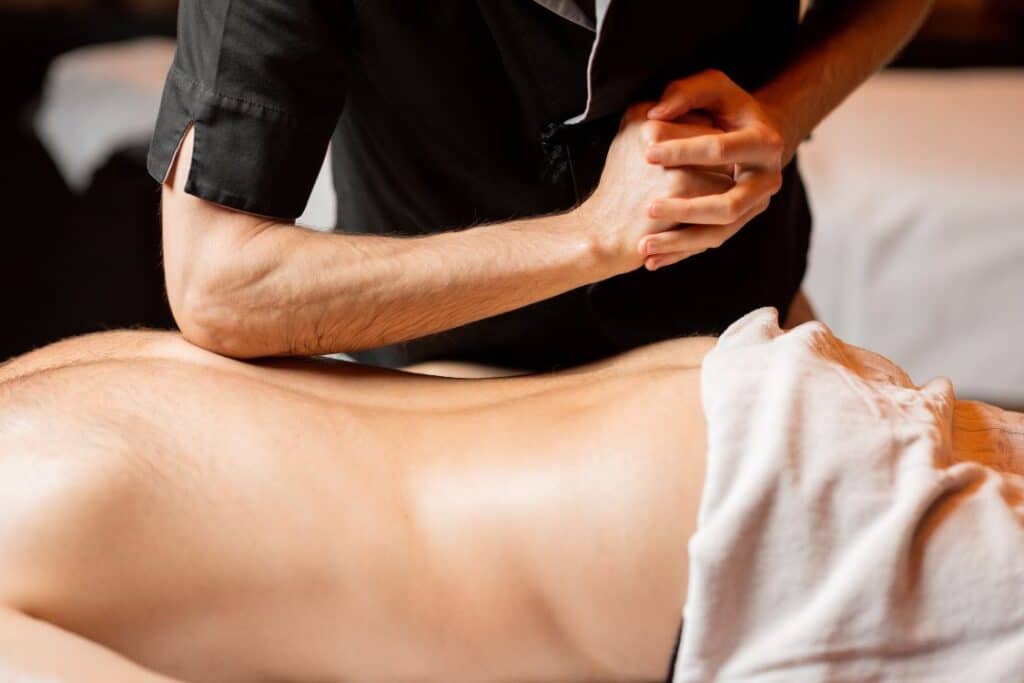
A deep massage session applies sustained deep pressure through thumbs, forearms, and knuckles to specific areas where tension, adhesions, and rigid tissue have built up over time.
A Swedish massage functions as a relaxation technique using longer, flowing strokes for general circulation, but deep tissue work focuses on the layers those strokes don’t reach.
The pressure and movements during a massage session release adhesions in the layers of muscles and connective tissue and improve the circulation of blood and lymph through the affected area.
Muscle fibres relax in response to sustained pressure in a way lighter work doesn’t trigger.
Massage can break down scar tissue as well, which is why it’s often used alongside physiotherapy rehabilitation after injury.
Blood flow through the treated tissue improves as the session progresses, and this is part of how deep tissue massage addresses conditions that a surface-level massage technique doesn’t reliably get to.

Does Deep Tissue Massage Need to Hurt?
Massage experts are consistent on this: a painful massage is not more effective than one delivered within a manageable range of discomfort.
Deep tissue sessions produce two kinds of sensation, and knowing the difference matters.
Productive discomfort is pressure on a tight area or trigger point that registers clearly but doesn’t feel threatening, and which typically eases as the therapist works through it.
Work on chronically restricted areas almost always produces this kind, particularly early in a course of treatment.
Pain that makes you hold your breath, clench, or feel like something is wrong is a prompt to say so.
Differences in Pain Tolerances
Sensitivity to pressure varies considerably from person to person.
Everyone’s body reacts differently to massage from one session to the next as well, depending on sleep, stress, and how the tissue is sitting that day.
Someone with a high pain threshold isn’t necessarily getting more benefit than someone who finds the same amount of pressure quite intense.
When pressure is applied to tissue that has been tight for months, it tends to produce more sensation than work on the same area three sessions later, once the tissue has started to respond.
The amount of pressure that works depends on what the body is showing that day, not on a fixed setting applied to everyone.
A good massage therapist reads those signals and adjusts throughout the session.
When muscles respond to excessive pressure by tensing up defensively, the treatment works against itself.
Pain during a session tells a therapist the intensity needs adjusting, not that treatment is working better.
Effects of Deep Tissue Massage: Why You Might Feel Sore After
Post-session soreness in the 24-48 hours after a deep tissue session is common, particularly after a first treatment or work on a new area of the body.
The mechanism is similar to delayed onset muscle soreness (DOMS) after exercise: the pressure stimulates the tissue, the body responds, and that response produces temporary muscle soreness as repair and adaptation happen.
As bad as it feels the morning after a first session, post-session soreness should ease within a couple of days and feel like general muscle soreness rather than sharp or joint-based pain.
The effects of deep tissue massage, once that initial soreness clears, typically include reduced stiffness and improved range of motion in the treated area.
Deep tissue massage can cause some bruising in people with sensitive skin or when firm pressure is applied to one spot for a prolonged period, so mention it to your therapist before your next appointment if this happens consistently.
If the discomfort feels sharp rather than like muscle soreness, or hasn’t eased within 48 hours, raise that with your therapist before your next appointment.
Benefits of Deep Tissue Massage
Helps Alleviate Pain and Tension
Chronic pain in the back, neck, and shoulders responds well to regular deep tissue work, particularly where muscle tension and pain have built up in the deeper layers of soft tissue over months or years and don’t shift with lighter massage therapy.
Sustained pressure and targeted technique address muscle knots, break up scar tissue from previous injuries, reduce stiffness, and allow range of motion to improve as rigid tissue gradually releases.
Active people carrying significant tension between training sessions often find relief before that tension builds into something that stops training altogether.
Tension headaches that originate in the neck and upper back sometimes improve with regular work on the restricted tissue there, and regular deep tissue treatment can form a practical part of a longer-term pain management approach for people with recurring soft tissue problems.
Improves Blood Flow and Can Reduce Inflammation
Improved blood flow through the treated area means better nutrient delivery and more efficient clearance of metabolic waste from the muscles and connective tissues.
Deep tissue massage can also help reduce inflammation in areas that have become chronically reactive.
Many people find the relief from pain they notice after treatment comes alongside a meaningful improvement in how freely the affected joint or muscle moves, because reducing the tension and pain in the tissue removes the restriction that was limiting movement in the first place.
Regular Sessions Can Help Improve and Maintain Movement
The benefits of deep tissue massage used proactively tend to be greater than the same treatment used reactively once movement is already noticeably restricted.
Booking before tension accumulates into a problem almost always produces better results.
A good therapist will help you work out what interval makes sense for how your body is responding.
Getting a Deep Tissue Massage: Managing Massage Pressure
Be Open with Your Therapist
The most common thing that makes a deep tissue session more painful than it needs to be is not speaking up.
If the amount of pressure feels like too much, let your therapist know.
A competent massage therapist will adjust the pressure immediately, without making you feel like you’re failing some kind of endurance test, and asking for less pressure is not a sign the treatment isn’t working.
Much pressure that feels excessive on one area of the body might be fine on another, so ongoing feedback during the session is more useful than a fixed intensity set at the start and left unchanged.
Communicate Beforehand on Sensitive Areas
Communicate with your therapist before the session about which areas need attention and whether anything is particularly sensitive.
During the treatment, try to relax into the pressure rather than brace against it: when the body tenses defensively against a deep stroke, the muscle becomes harder to work with and the sensation increases.
If you notice you’re holding your breath, the massage intensity has almost certainly gone past productive.
Understand Sensitivity Shifts
Sensitivity to pressure shifts from session to session based on stress, hydration, and sleep quality, and also on whether the tissue is currently inflamed.
A session on a day when you haven’t slept well or haven’t drunk much beforehand will often feel considerably more intense than the same treatment a week later in better condition.
Mentioning these factors at the start of a session helps your therapist adjust the pressure and movements to match what the tissue can actually use that day.
Who Should Avoid Deep Tissue Massage
Deep tissue massage is not suitable for everyone.
Your massage therapists will always check your health history beforehand to ensure the treatment is appropriate and safe.
Deep tissue pressure carries risk if you have blood clots or a history of thrombosis, an active injury where the tissue is currently inflamed, an open wound, or a skin condition affecting the area to be treated.
Recent surgery is also a contraindication until adequate healing has occurred.
If you’re pregnant, specific areas need to be avoided, and a therapist experienced in pregnancy massage is usually the more appropriate type of massage therapy for that stage rather than a standard deep tissue session.
Osteoporosis, bleeding disorders, and active skin infections in the area to be treated are other reasons to avoid deep tissue massage or seek specific advice first.
If you’re on blood-thinning medication, the bruising risk from sustained pressure increases.
In any of these situations, letting your therapist know before the session allows them to adjust the approach or recommend a different option.
After Your Massage Therapy Session
Drinking plenty of water after a deep tissue massage is standard advice, and it makes a difference.
The pressure and movements during the session stimulate circulation and begin breaking down areas of restriction, and hydration helps that process along in the hours that follow.
Keeping fluid levels up through the rest of the day is all that’s needed.
Light stretching on the day after a session can ease any residual muscle soreness and help maintain the range of motion gained from the treatment.
Heavy training directly after a deep tissue massage is worth avoiding, since the tissue has been worked and needs time to settle.
The 24-48 hours after a good session typically feel like mild soreness alongside noticeably freer movement, and the effects build across subsequent sessions as the tissue progressively responds.
Your massage therapist will also be best able to advise on how often you should get a massage.
Common Questions About Deep Tissue Massage
Do massages actually get knots out?
A knot is a localised area of hyper-contracted muscle fibres with restricted blood flow and accumulated metabolic waste. Deep tissue massage can break up that rigid tissue by applying sustained pressure. Sustained pressure over a tight area encourages the fibres to release and improves circulation through it. Whether one session fully resolves a knot depends on how established it is, but regular massage sessions generally reduce both the size and the sensitivity of these areas over time.
How intense is a deep tissue massage?
More intense than a Swedish massage, typically, but “intense” covers a wide range. A skilled therapist adjusts massage pressure based on the tissue they’re working with and your feedback during the session. The pressure should feel purposeful and manageable rather than aggressive, and if you can’t breathe normally throughout, the intensity needs reducing.
When should you not get a deep tissue massage?
Avoid deep tissue massage during acute injury, before adequate healing post-surgery, with active blood clots, or when a skin condition affects the treatment area. The section above covers this in more detail. If anything isn’t clear before you book, a brief call to the clinic resolves most questions.
Is a 30-minute deep tissue massage enough?
For a specific area, such as the upper back and neck or one muscle group, 30 minutes is workable. For wider tension or a larger treatment area, 60 minutes gives the therapist adequate time to work properly. If you’re dealing with chronic pain across several regions, a longer initial session tends to be more useful than several shorter ones spread across multiple bookings.
Book a Deep Tissue Massage with Active Health Clinic Glasgow
To book a deep tissue massage at Active Health Clinic Glasgow, you can book online or call us on 07427 737 604.
If you’re not sure whether deep tissue massage or sports massage suits your situation better, get in touch and we’ll help work that out before you commit to a booking.
Our friendly massage therapists always have your goals in mind to find a treatment plant that works for you.
Book Your Appointment
Ready to take the next step? Book your appointment today or call us on 07427 737 604. We’re here to help with tailored, evidence-based care.