
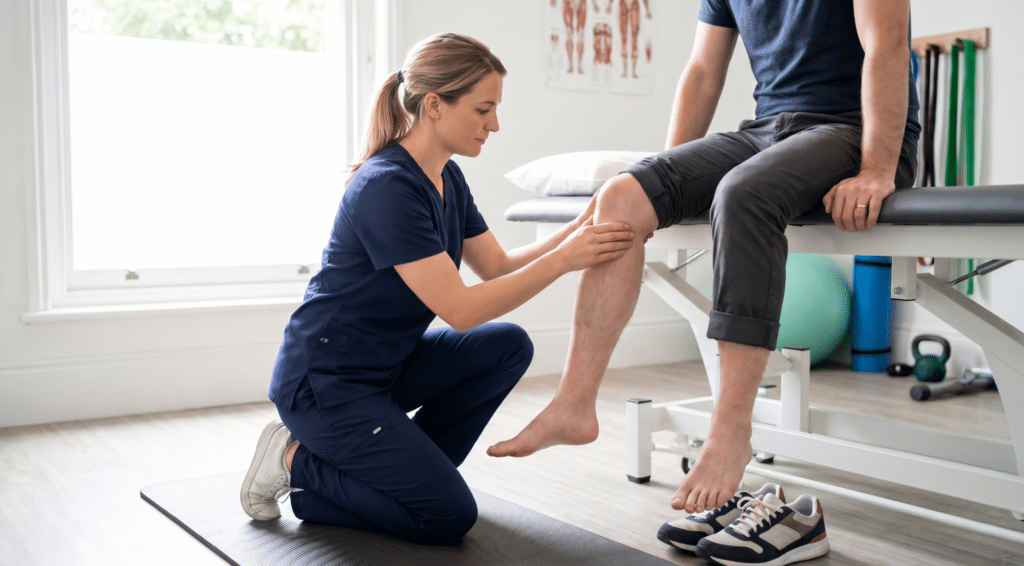
What you wear to physiotherapy changes what your physiotherapist can see and do in the first few minutes of your session. That’s true whether you call it physiotherapy or physical therapy.
A physiotherapy session has no strict dress code. Dressing with your specific appointment in mind saves time once treatment starts.
This page is written for anyone who has searched what to wear to my physiotherapy appointment. Knowing what to expect at your first physiotherapy appointment makes the clothing decision far easier.
The short version: wear something loose, comfortable, and easy to move in, then think about which part of your body brought you in.
Different areas of your body need slightly different things.
The specifics change depending on whether you’re seeing us for a knee, a shoulder, or a back that’s been giving you grief for weeks.
General guidelines for your physiotherapy outfit – Guide from Glasgow physiotherapists
Wearing clothing that allows easy movement is the baseline for almost every physiotherapy session.
Wear something that gives easy access to the area troubling you, too.
Your physiotherapist needs to watch how you move, assess your posture or gait, and take you through stretches as part of the assessment. Restrictive clothing works against that from the first five minutes and can end up getting in the way once treatment starts, especially if you are recovering from injury or post operation.
Loose fitting trousers, joggers, or leggings allow you to move more freely than jeans or tailored trousers ever would.
We’d recommend wearing a t-shirt, vest top, or tank top too, since they give more room than a fitted shirt.
Shorts and layers
Shorts are worth packing if a knee or hip problem brought you in. You might wear them under trousers too, if you’d rather arrive with your legs more covered.
They give easy access to the area without you needing to change, and athletic wear like this lets you move freely.
Layers are the practical answer for Glasgow weather, since loose clothing underneath copes with both temperature and movement.
Bring a jumper for the walk over, then peel it off once you’re inside.
Footwear for your appointment
Trainers or other flat, supportive shoes with good support beat sandals, heels, or boots you have to fight your way out of.
You may be asked to remove your shoes and socks during a gait or posture assessment, particularly for a knee, ankle, or foot problem.
Athletic shoes that come off easily save time you’d rather spend on treatment, though a thicker sock may be required if you feel the cold.
Bring a spare pair of socks if you’re worried about cold feet. Bare feet on a cold treatment room floor make it harder to focus on your exercises.
The type of clothing to wear for each area
The best type of clothing to wear depends on which part of the body brought you in.
We need to assess that area properly, so general guidance only gets you so far.
Knee, ankle, or foot
Shorts or loose tracksuit bottoms that pull up easily give the clearest access here. Loose pants that roll up work almost as well if you’d rather keep your legs covered.
The goal is simply to wear clothing that allows easy access to the knee. That way, your physiotherapist can observe the joint through its full range of motion without rolling up trouser legs.
The same rule applies whether your pain came from an old injury or a fresh one on the pitch.
Shoulder or upper back
A vest top, tank top, or singlet gives full visibility of the shoulder joint and the muscles around the upper back.
That matters for spotting exactly how shoulder pain and other shoulder problems move and where they catch.
Avoid tight sleeves or a bra strap that digs in, since both restrict movement your physiotherapist needs to see clearly.
Lower back and hip
Low back pain and hip pain are the single most common reasons people come through our door.
Back pain in general deserves more thought than the other areas combined.
Pants that pull down easily at the waistband work best, without needing to undress to your underwear. Your physiotherapist can then assess your posture and the alignment of your pelvis.
Skip anything with a tight waistband or belt, since both change how you stand the moment you put them on. Standing differently changes what we see during a full physical assessment of your injury.
A loose-fitting top that doesn’t ride up when you bend also helps.
It means your physiotherapist can put hands on your skin to treat the area during manual therapy.
Do you need to undress for physiotherapy?
Rarely, and never without being asked first.
Most physiotherapy sessions only need your physiotherapist to see and access the treated area.
Physiotherapists use their hands to assess muscle and joint movement. Wearing appropriate clothing gives them skin access to the treated area without bulky fabric getting in the way.
You’ll almost never be asked to undress fully. If it happens, it’s agreed with you beforehand rather than sprung on you at the treatment table.
A handful of sessions involve some treatment that needs closer access, such as certain massage therapy techniques.
Even then, you’ll only be asked to remove one item, not your whole outfit, with a towel covering the rest.
You can always ask to keep more on than requested if it makes you more comfortable. We’ll work around that without treating it as an inconvenience.
What else to bring to your first physiotherapy appointment
Bring a brief note of your medical history, including previous injuries, surgeries, or ongoing conditions. This shapes your treatment plan from your initial appointment onwards.
If you already have a medical diagnosis or scan report for the problem, bring that paperwork too, even if you mentioned it while booking.
A change of clothes helps if your session involves gentle exercise that leaves you warmer than you arrived. That’s especially true after a longer sports injury rehabilitation session.
It’s easy to forget to bring water too, but worth packing for the same reason.
What to avoid wearing
Skip jewellery, watches, and anything metal near the area being treated.
It gets in the way during hands-on techniques, catches on strapping or taping, and blocks easy access to the treatment area.
Restrictive clothing and tight waistbands undo the point of dressing for a physiotherapy appointment in the first place.
Perfume and strong scented lotion are worth skipping too, particularly before massage therapy.
Some clients may be sensitive to strong smells in a small treatment room.
Ready for your physiotherapy session?
Loose, comfortable clothing that gives easy access to whatever’s bothering you is the best clothing choice for most physiotherapy sessions at our Glasgow clinic.
Pair it with shoes you can slip off with ease.
Every session here is led by one of our HCPC-registered chartered physiotherapists.
If you’ve picked up a knock during training, our running injury physiotherapy team will tell you exactly what to wear for your session too.
Still not sure what to wear to your physiotherapy appointment? Our physio team is happy to talk it through before you arrive.
Mention it when you book online or call us on 07427 737 604.
Book Your Appointment
Ready to take the next step? Book your appointment today or call us on 07427 737 604. We’re here to help with tailored, evidence-based care.